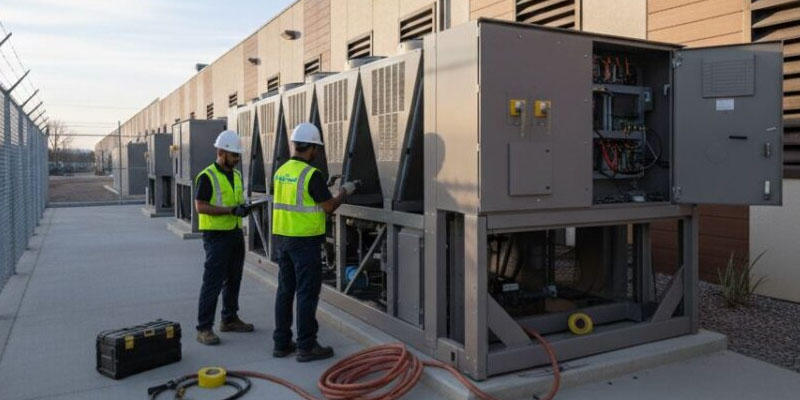
When the mercury hits 50°C, your industrial water chiller UAE is no longer just a piece of equipment; it's a survival-critical asset for your entire operation. You've likely experienced the stress of rising energy bills and the threat of unscheduled downtime during the peak summer months. We understand that in this climate, cooling efficiency is the difference between a profitable season and a series of expensive repairs. This guide provides the technical roadmap you need to ensure zero downtime and maximum energy efficiency.
We'll explore the critical engineering standards required by the Dubai Building Code and the latest federal climate laws, including Federal Decree-Law No. 11 of 2024. You'll learn how to optimize your system to meet ESMA certification requirements while significantly reducing operational costs. From understanding Coefficient of Performance (COP) ratings to establishing a 10-year maintenance plan, we'll help you transform your cooling infrastructure into a reliable, high-performance asset.
An industrial water chiller UAE is far more than a standard cooling unit; it's the heart of a production line. While residential cooling focuses on human comfort, industrial chillers are engineered for high-precision temperature control of machinery and volatile materials. These systems must operate as process-critical engines that run 24/7 without deviation. In many manufacturing sectors, a temperature fluctuation of even two degrees can ruin an entire batch of product or cause permanent damage to sensitive equipment.
Standard global chiller specifications often fail in the Emirates because they're designed for temperate climates. Most international models are rated for a maximum ambient temperature of 35°C or 40°C. When local temperatures soar past 50°C, these standard units lose their ability to shed heat. To understand how industrial chillers work in these conditions, you must look at the refrigeration cycle. As external heat rises, the pressure within the system increases, forcing the compressor to work significantly harder. This doesn't just raise your energy bill; it pushes the equipment toward a total mechanical breakdown.
High humidity in coastal regions like Dubai and Abu Dhabi creates a double-edged sword for heat exchange efficiency. Moist air holds more heat, making it harder for air-cooled systems to cool the refrigerant. In unoptimized systems, this leads to frequent "high-pressure trips." These are safety shutdowns that occur when the internal pressure exceeds the system's design limits. Without specialized engineering, your facility faces constant, unpredictable downtime during the hottest months.
High-ambient engineering for UAE industrial applications is the specialized design of oversized condensers, high-torque compressors, and specific refrigerant charges that maintain rated cooling capacity at outdoor temperatures of 52°C and above.
The demand for robust cooling spans every major sector in the UAE. Precision is the common denominator across these diverse applications:
Transitioning from basic HVAC to high-precision process cooling is a necessity for any business looking to scale. It's about moving from a "comfort" mindset to a "reliability" mindset where the cooling system is treated as a foundational part of the industrial lifecycle.
Choosing the right architecture for an industrial water chiller UAE depends on your facility's scale and resource availability. While both systems use the same basic refrigeration cycle, they differ in how they reject heat. In the Emirates, this choice is heavily influenced by high ambient temperatures and the cost of utility inputs like water and electricity. Engineering teams must weigh the mechanical simplicity of air-cooled units against the superior thermodynamic efficiency of water-cooled plants.
Air-cooled systems are the primary choice for most warehouses and mid-sized industrial facilities across the UAE. Their dominance stems from a design that eliminates the need for cooling towers and complex water piping. To survive the local heat, these units feature oversized condenser coils and high-static fans that move massive volumes of air. This design ensures the system doesn't trip when outdoor temperatures exceed 50°C. For many businesses, the reduced footprint and lower initial installation cost make these industrial water chillers the most practical solution for immediate cooling needs.
For massive industrial plants or district cooling, water-cooled chillers offer a higher Coefficient of Performance (COP). When evaluating an industrial water chiller UAE for a large-scale project, the focus shifts toward maximizing the lifecycle ROI through reduced power consumption. According to the Dubai Building Code, water-cooled systems must achieve a COP between 5.50 and 6.20. While they're more efficient, they require a constant supply of water, which costs approximately AED 7.84 per cubic meter in Dubai. Facilities must follow rigorous chiller efficiency standards to ensure the system's long-term ROI justifies the infrastructure complexity.
The core components of these systems, including the compressor, evaporator, and condenser, must be selected for high-temperature stability. We prioritize high-torque screw or centrifugal compressors that can handle the increased lift required in desert climates. Refrigerant selection is also critical. Modern systems use refrigerants with low Global Warming Potential (GWP) that remain stable under extreme pressure. This ensures your facility stays compliant with the latest environmental regulations while maintaining peak performance during the hottest months of the year.
Investing in an industrial water chiller UAE requires a shift from focusing on the initial purchase price to evaluating the Total Cost of Ownership (TCO). In the Emirates, the acquisition cost typically represents only about 20% of the system's lifecycle expenses. The remaining 80% is consumed by energy, water, and maintenance. With industrial power costs in Dubai sitting at approximately AED 0.405/kWh, even a minor improvement in the Energy Efficiency Ratio (EER) can result in savings of thousands of dirhams every month.
Efficiency isn't just about peak performance. It's about how the system handles the "shoulder months" and nighttime operations. This is where part-load efficiency becomes critical. Modern systems utilize advanced compressors that maintain high performance even when the plant isn't running at full capacity. By focusing on improving chiller efficiency through technical upgrades, businesses can align with the UAE's federal climate mandates while protecting their bottom line.
Part-load efficiency is the most overlooked metric in the UAE. Most industrial processes don't require 100% cooling capacity 24 hours a day. High-efficiency compressors reduce the national carbon footprint by consuming less power during these off-peak periods. Variable Frequency Drive (VFD) technology significantly reduces operational costs in UAE industrial settings by adjusting motor speed to match actual cooling demand during cooler night hours or reduced production cycles.
Sizing an industrial water chiller UAE is a delicate engineering balance. Under-sizing leads to equipment failure during a 50°C heatwave. Over-sizing is equally dangerous; it causes "short-cycling," which wears out the compressor prematurely and wastes energy. To determine the correct size, you must calculate the total heat load using the formula: Q = Flow Rate × Weight of Liquid × Specific Heat × Temperature Differential.
In the UAE, you must also factor in ambient heat gain. Outdoor pipes and tanks absorb significant thermal energy from the sun. We recommend adding a 20% safety margin to the calculated BTU requirements to account for the extreme radiant heat found in local industrial zones. Proper flow rates and temperature differentials ensure that your process cooling remains stable, regardless of the outdoor environment. This methodical approach to sizing protects your machinery and ensures that your cooling investment delivers the expected ROI over its 15 to 20-year lifespan.
Selecting an industrial water chiller UAE requires a methodical approach that accounts for local environmental variables. The process begins with a comprehensive thermal load audit of your facility. This audit identifies the exact cooling tonnage needed by measuring heat generated from production processes, machinery, and radiant solar gain through the building envelope. Once the load is defined, you must evaluate site constraints such as power grid capacity and physical footprint. In regions like Dubai, where industrial power costs are approximately AED 0.405/kWh, ensuring your electrical infrastructure can handle the high-torque startup of a large chiller is essential for preventing voltage drops across your facility.
The success of your cooling system depends heavily on the supplier's local infrastructure. You need a partner who maintains a deep inventory of spare parts within the Emirates. Relying on international shipping for critical components like compressors or expansion valves during a July heatwave can lead to catastrophic production losses. Professional installation is a procedural necessity that dictates the system's operational lifespan. This includes commission testing under actual load conditions and establishing a performance baseline. This baseline allows you to monitor temperature differentials and flow rates, ensuring the system operates at peak efficiency from day one.
Technical support must be the cornerstone of your selection criteria. Industrial clients require rapid response times and technicians who understand the specific challenges of the UAE climate. Evaluate the warranty terms carefully; a comprehensive warranty should cover both parts and labor, reflecting the supplier's confidence in their equipment's durability. A reliable supplier acts as a long-term consultant, providing a roadmap for future upgrades. For those seeking a dependable partner, Selecting an Experienced Chiller Company in the UAE is the most critical step in securing your facility's cooling future.
Optimal placement is critical for heat dissipation. Units must be positioned to allow for maximum airflow, away from hot exhaust vents or stagnant air pockets that can cause the system to overheat. Electrical safety standards must be strictly followed, including the installation of industrial-grade surge protection to safeguard sensitive control electronics from power fluctuations. Finally, integrate the chiller with your existing Building Management System (BMS). This integration provides real-time data on system health, allowing your team to identify minor efficiency drops before they escalate into expensive mechanical failures.
Adopting a "run-to-fail" approach in the UAE industrial sector is a high-risk strategy that often leads to catastrophic operational costs. When an industrial water chiller UAE operates in ambient temperatures exceeding 50°C, the margin for mechanical error disappears. A minor component failure that might cause a brief shutdown in a temperate climate can lead to a total compressor burnout here. This results in weeks of downtime and repair costs that far exceed the price of a standard service agreement. Reliability is built on the foundation of a structured Preventive Maintenance (PM) contract.
These contracts move your facility from reactive repairs to proactive lifecycle management. A typical PM agreement includes a rigorous schedule of inspections designed to catch wear before it triggers a system trip. By identifying issues early, you avoid the high cost of emergency parts procurement and unscheduled labor. Technical specialists in the region often observe that systems under a professional maintenance roadmap can see an equipment lifespan extension of up to 50% compared to neglected units. This procedural approach protects your capital investment and ensures that your production remains stable during the harshest summer months.
The most immediate benefit of a PM contract is the preservation of energy efficiency. In the UAE, sand and fine dust accumulate rapidly on condenser coils. This debris creates an insulating layer that forces the system to consume more power to achieve the same cooling effect. Scheduled cleaning ensures that heat exchange remains optimal, keeping your utility bills predictable. Without this regular care, even the most efficient chiller will see a sharp rise in its Energy Efficiency Ratio (EER).
Beyond cleaning, these contracts include sophisticated oil and refrigerant analysis. By testing the chemical composition of these fluids, technicians can detect the presence of metal shavings or acid. These are early warning signs of internal compressor wear. Addressing these issues during a scheduled shutdown is significantly cheaper than replacing a seized compressor in the middle of a production cycle. Additionally, contract holders receive priority service. This ensures that if a problem does arise, your facility is the first on the list for technical assistance, reducing the risk of extended downtime.
Our specialized focus is on high-performance industrial and commercial systems that face the harshest conditions on the planet. We provide national maintenance coverage with technical teams that are deeply familiar with the environmental challenges specific to the Emirates. We understand that your cooling system is a lifecycle investment that requires precision care from installation through to its eventual decommissioning. Our methodical approach ensures that every valve, sensor, and motor is calibrated for maximum uptime. We don't just fix problems; we provide the engineering data you need to manage your facility's cooling roadmap for the next decade. Secure your facility with a Preventive Maintenance Contract from Water Chillers UAE to ensure your operations remain cool, efficient, and profitable regardless of the outdoor temperature.
Managing an industrial water chiller UAE requires more than just a purchase; it demands a long-term commitment to engineering precision and operational discipline. By prioritizing high-ambient specifications and moving away from a high-risk "run-to-fail" mentality, your facility can maintain zero downtime even when temperatures exceed 50°C. We've explored how the right architecture, coupled with a structured preventive maintenance roadmap, reduces lifecycle costs and protects your critical production assets from the harsh desert environment.
Our team brings over 10 years of UAE technical expertise to every project, specializing in high-ambient industrial systems built to thrive in the Emirates. We provide comprehensive national maintenance support to ensure your cooling infrastructure remains a reliable engine for your business. Don't leave your summer operations to chance. Request a Technical Consultation for Your Industrial Cooling Needs today and gain the peace of mind that comes from professional cooling management. Your facility's long-term efficiency starts with a single strategic assessment.
What is the difference between an HVAC chiller and an industrial process chiller?
An industrial process chiller is designed for the precise, 24/7 cooling of machinery and manufacturing volatile materials, whereas an HVAC chiller focuses on human comfort in buildings. Process chillers must maintain a constant temperature regardless of the heat load from the factory floor. They feature more robust compressors and internal bypass valves to handle the continuous duty cycles that standard building cooling systems aren't built to sustain.
How does the UAE summer affect the cooling capacity of an air-cooled chiller?
Extreme summer heat reduces the cooling capacity of an industrial water chiller UAE by narrowing the temperature differential between the refrigerant and the outdoor air. When ambient temperatures exceed 50°C, the condenser struggles to reject heat, which lowers the system's overall tonnage. This forces the compressor to run for longer periods at higher pressures, increasing both energy consumption and the risk of a high-pressure safety trip.
How often should an industrial water chiller be serviced in the UAE?
Industrial units in the Emirates require a full technical inspection at least every three months. During the peak summer period from May to September, we recommend monthly cleaning of the condenser coils to remove sand and dust buildup. This frequent schedule is necessary because the local environment accelerates wear on moving parts and reduces heat exchange efficiency much faster than in temperate climates.
Can I use a domestic water chiller for a small industrial process?
You shouldn't use a domestic water chiller for any industrial application because it lacks the engineering required for continuous operation. Domestic units are designed for intermittent use and cannot handle the high-intensity thermal loads generated by industrial machinery. Attempting to use a residential unit for process cooling usually leads to a seized compressor and voided warranties within a few months of operation.
What is the typical lifespan of an industrial chiller in a high-ambient environment?
In the UAE's high-ambient environment, a professionally maintained industrial chiller typically lasts between 10 and 15 years. Without a structured maintenance roadmap, this lifespan can drop to less than five years. The intense heat and humidity put constant stress on the refrigeration cycle, making proactive care the only way to ensure the equipment reaches its full design life.
How much can a preventive maintenance contract save my business annually?
A Preventive Maintenance Contract saves your business money by preventing the catastrophic costs associated with unscheduled production stops. While the exact savings depend on your facility's scale, avoiding just one major compressor failure can save you tens of thousands of dirhams in repair costs and lost output. Regular tuning also keeps your energy bills lower by ensuring the industrial water chiller UAE operates at its peak Energy Efficiency Ratio (EER).
What are the most common causes of chiller failure in the UAE?
The primary causes of failure are clogged condenser coils, refrigerant leaks caused by thermal expansion, and high-pressure trips during peak heat hours. Sand and fine desert dust act as an insulator on the coils, preventing heat rejection and forcing the system to operate at dangerous pressure levels. If these issues aren't addressed through routine cleaning, the compressor eventually burns out from the excessive workload.
Is it better to repair or replace an aging industrial chiller unit?
It's generally better to replace an aging unit if the repair cost exceeds 50% of the price of a new system or if the unit is more than 10 years old. Newer models offer significantly better efficiency and are designed to meet the latest UAE federal climate regulations. Replacing an old, inefficient chiller can reduce your facility's monthly power bills enough to pay for the new equipment within a few years.