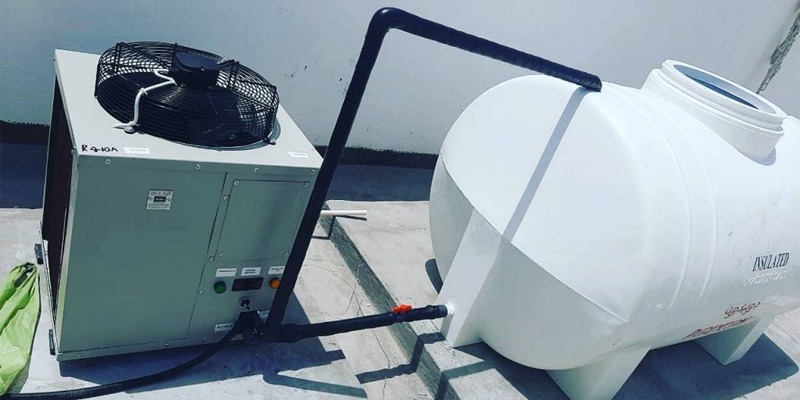
Dubai summers don't mess around. If you've spent even one July there, you already know — the heat isn't something you push through, it's something you engineer around. Most of the buildings that stay cool aren't running on a few wall-mounted AC units. They're running on something much bigger, and most people walking through those lobbies never think about what's actually keeping the air breathable.
A water chiller system in Dubai works by cooling water and moving it through a building's pipe network to pull heat out of large indoor spaces. It's not like a regular split AC. Those work fine for apartments or small offices. But once you're talking about a hotel with 300 rooms, a hospital, a shopping mall, or a large office tower — a split unit doesn't cut it. Chillers exist for exactly that kind of scale.
The cooled water travels through the building, absorbs heat from the air inside, then returns to the chiller to get cooled again. That cycle runs continuously. And in Dubai, it runs for months without a real break.
That kind of constant use puts serious wear on the equipment. A chiller that trips out in the middle of August — in a commercial building full of people — isn't just uncomfortable, it's a real operational problem. That's why the reliability of both the equipment and the people who install it matters a lot more than most buyers initially think.
There's a big difference between a company that sells you a unit and one that helps you figure out what you need before anything gets ordered. When comparing water chiller suppliers in UAE, a few things are worth checking before signing anything.
Do they do site assessments, or do they just take your square footage and quote a number? Do they service what they sell, or is maintenance someone else's problem after delivery? What brands do they carry, and are they recommending based on fit or just pushing what they have in stock?
Some suppliers only work with one brand. That's not automatically a problem, but it does limit the advice you're getting. A supplier that works across multiple manufacturers tends to give recommendations based on the actual building, not just inventory.
Also ask about installation experience. A chiller that's correctly sized but badly installed still causes problems — refrigerant issues, poor pipe runs, pressure imbalances. Installation quality matters as much as the equipment itself.
Water Chillers UAE handles both supply and full installation across the UAE. If a project needs someone involved from the specification stage through to commissioning and after-sales service, they're worth contacting. Their site is waterchillersuae.com.
Some parts of Dubai use district cooling — chilled water is generated centrally and piped to buildings through a shared network. It's common in newer developments and certain zones. But plenty of buildings still run their own dedicated water chiller system in Dubai, particularly older structures, villas, warehouses, and industrial facilities that aren't connected to a district network.
The right choice depends on location, existing infrastructure, and what the building actually needs. A district cooling connection might be cheaper to run in some areas. In others, an independent chiller gives more control and isn't subject to district pricing or availability.
Getting this decision wrong isn't just an upfront cost problem. It compounds. An undersized chiller runs harder and breaks sooner. An oversized one wastes energy every hour it runs. The wrong supplier disappears after delivery and leaves maintenance to chance.
Taking a bit more time at the start — getting multiple quotes, asking harder questions, checking references — saves real money over the lifespan of the system.
If you're in the early stages of a project or replacing aging equipment, water chiller suppliers in UAE worth talking to include companies that offer full-cycle support, not just hardware. Water Chillers UAE is one place to start — reach them at waterchillersuae.com.